India · Ahmedabad and Gandhian networks / 1920s–1940s · movement; photograph 2019
Khadi and the spinning wheel
Cloth as a political economy
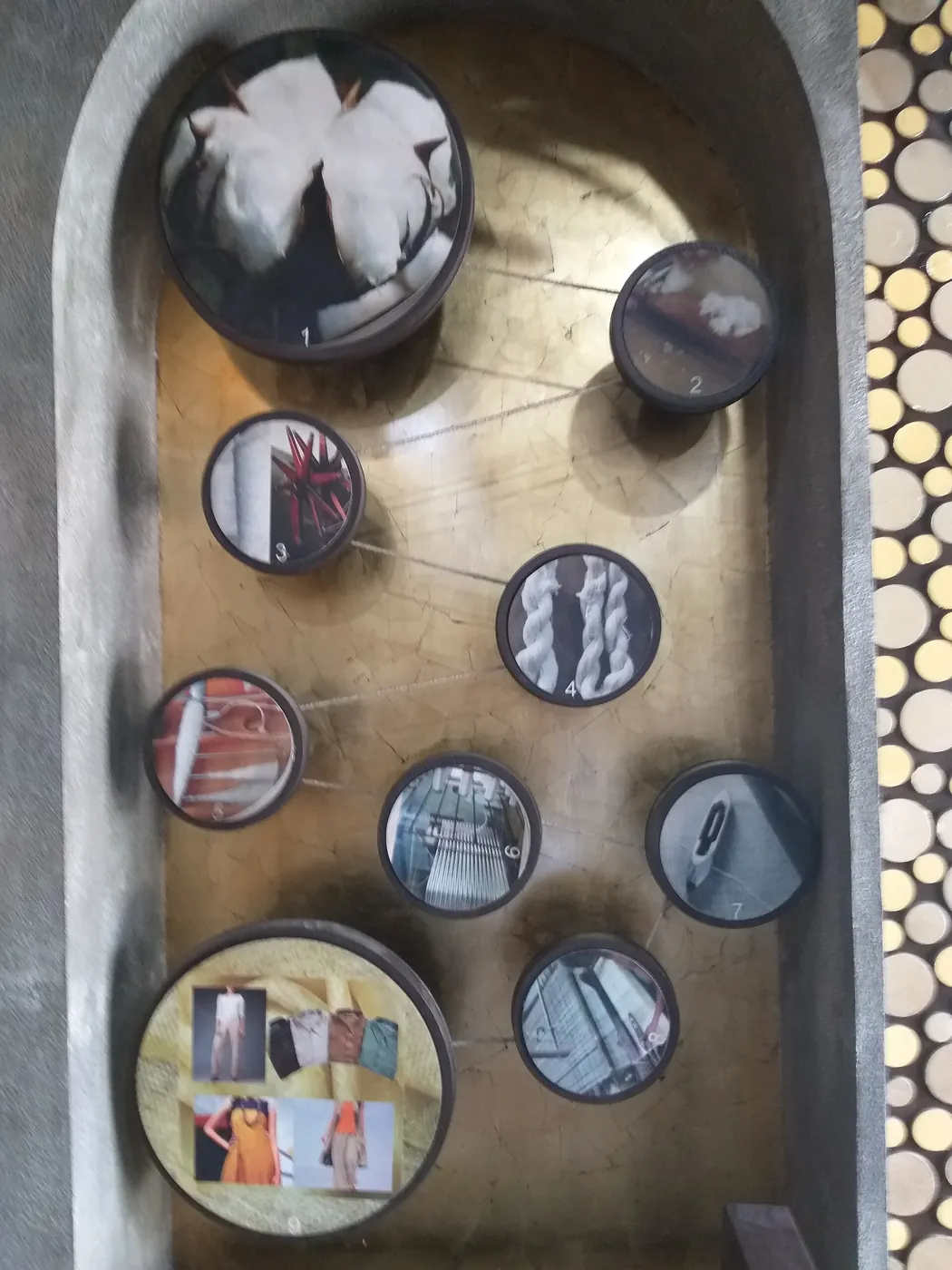
A 2019 photograph of khadi production. The photograph is contemporary; the spinning-wheel politics it documents are historical.
Downloaded from Wikimedia Commons at a 1600px rendering; converted to a JPEG working master and a WebP reading copy, maximum 1400px, quality 80; no content retouching.
Khadi is cloth made from hand-spun yarn. Gandhi made it a practical and symbolic part of swadeshi: boycott imported cloth, spin and weave at home, and treat consumption as a political act. The programme created work and a public language of self-rule; it also carried moral pressure and could romanticise arduous manual labour. The photograph, taken in 2019, shows khadi production today, not a scene from the independence movement. The question it leaves is whether dignified work can be organised without turning a symbol into a compulsory virtue.
- Date
- 1920s–1940s · movement; photograph 2019
- Maker / designer
- Gandhian swadeshi networks; individual spinners vary
- Material
- Hand-spun and hand-woven cotton
- Context
- A swadeshi and anti-colonial cloth politics; not every Indian worker or nationalist shared one programme.
Evidence: Date is a period or later photograph · Place established
Historical record
- Gandhi promoted khadi and the charkha as part of swadeshi.
- The photograph is a 2019 image of khadi production; it is not a historical photograph of Gandhi or the independence movement.
